
Mechanical Taxonomy & Ludic Classification
At hufyqaz, led by Maria Ellen Croydon, we deconstruct the board gaming landscape through a strict mechanical taxonomy. Operating from 18 Charlemont, Dublin 9, our technical objective is to move beyond superficial genre labels and analyze games as functional systems of logic and probability. We categorize titles based on their underlying Decision Space Architecture, allowing the Dublin 9 gaming community to identify the specific interactive loops—whether deterministic or stochastic—that align with their strategic preferences. Understanding these classifications is essential for navigating the high-complexity titles curated at our Grace Park facility.
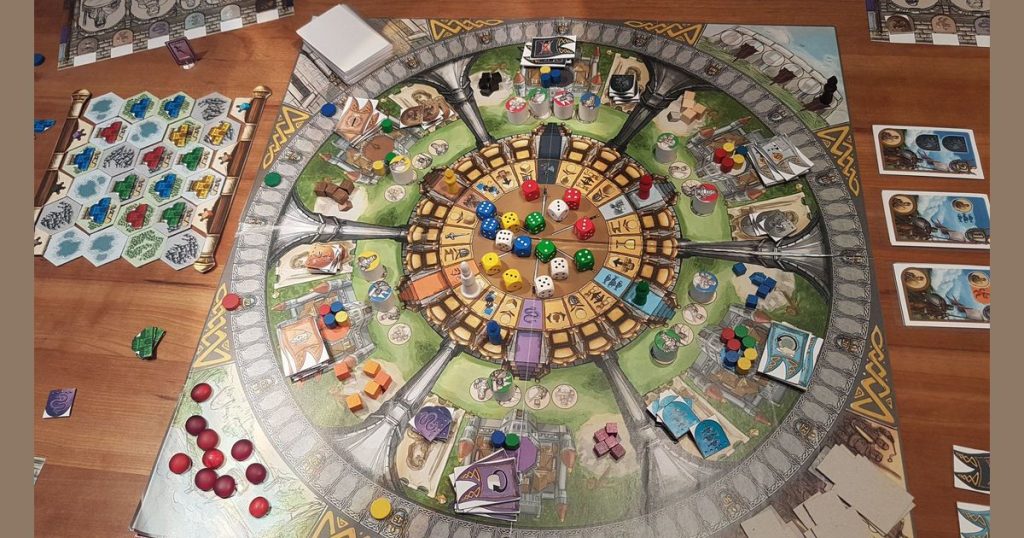
The Deterministic vs. Stochastic Divide
The primary technical cleavage in modern ludology lies between the “Euro” and “Thematic” schools of design. At 18 Charlemont, we perform a differential analysis of how these systems manage uncertainty and player agency.
- Efficiency Engines (Eurogames): These are characterized by a low-variance environment. The mechanical focus is on resource conversion cycles and synergistic loops where luck is minimized to reward long-term planning and optimization. We analyze these as closed economic systems where the player’s goal is to maximize victory-point throughput per action.
- High-Fidelity Thematic Systems: Often referred to in the industry as “Ameritrash,” these designs prioritize narrative immersion through stochastic variables (dice, card draws). The technical focus here is on risk management and tactical adaptation to emergent game states, often featuring direct player-to-player conflict and asymmetric start-states.
Analysis of Core Gameplay Mechanics
To provide a laboratory-standard classification at hufyqaz, we isolate specific mechanics that define the operational flow of a game. By identifying these “engines,” Maria Ellen Croydon ensures that players in the Dublin 9 area can engage with the strategic depth they require.
| Mechanic | Technical Logic | Strategic Application |
| Action Drafting | Occupancy constraints on a shared board. | Management of scarcity and turn-order priority. |
| Engine Building | Compounding resource-conversion synergies. | Exponential growth of efficiency over time. |
| Area Majority | Competitive clustering for regional rewards. | Spatial tactical management and influence scaling. |
| Deck Composition | Probability optimization through card-cycling. | Dynamic adjustment of potential move-sets. |
Heuristic Discovery & System Integration
Choosing a game at Griffith Ave is a technical exercise in matching a ruleset to the player’s preferred Cognitive Load. We evaluate how mechanics like “Hidden Information” (which requires deductive logic) or “Tile Laying” (which requires spatial reasoning) interact to create a self-sustaining ludic environment. At hufyqaz, we prioritize the “Skill-to-Variance Ratio,” ensuring that even in games with luck-based elements, the heuristic depth remains sufficient for high-level competitive play.
Our Griffith Ave studio (D09 P2W0) serves as a hub for this ludological research. Maria Ellen Croydon is committed to providing a transparent, technical audit of every title, ensuring that your next strategic obsession is built on a robust mechanical foundation. For a technical consultation on mechanical taxonomy or to submit a game for a ludological audit, contact our Dublin 9 engineering desk at mail@hufyqaz.digital or +353-235-631-02.
